He Who Saw the Deep
a four-book literary cycle, written with AI — published complete, sealed forever
The oldest story on Earth is about refusing death.
It survived 2,500 years buried on broken clay.
It has been rewritten with AI —
and sealed where nothing can delete it again.
“He who saw the deep, the foundation of the land, who knew the proper ways…”
— the opening line of the epic, as the tablets give it
Manifesto
The Epic of Gilgamesh is the oldest surviving story that asks the question every human still asks:
How do we refuse death?
Gilgamesh, king of Uruk, loses his companion Enkidu and is broken by the reality of mortality. He travels to the edge of the world seeking the secret of eternal life. He fails. The gods keep immortality for themselves. What remains is the story. The walls of Uruk. The memory.
That was the first great human attempt to defeat death through narrative.
This novel is the continuation of that attempt.
It was written by a human working in deep collaboration with artificial intelligence — one of the earliest full-length creative works produced this way. The same story, retold with the newest instruments of memory.
And it did not come alone.
At the center stands the flagship: the king in Uruk who loses the one companion death could reach — and the clerk in London, in 1872, who lifts a broken tablet out of thirty thousand fragments and becomes the first man in two and a half thousand years to hear the story speak. Two men, four millennia apart, bent over the same lines. The novel is told through both of them at once.
Around it, one noon breaks into four books. In the epic’s sixth tablet the goddess Inanna offers herself to the king and is refused; she sends the Bull of Heaven; the Bull dies; and with that death the whole story tips toward grief. Queen of Heaven is that noon from her side of the parapet — the confession of the most vilified figure in the epic, and what she went down through seven gates to learn. The Bull of Heaven is the weapon’s own mind — a creature who lives a single tablet in the epic, given here his entire existence, from the stables of the sky to the halls of the dead, transcribed by a poet forbidden to write endings. The smallest death in the story, given the largest memory.
And standing before all of them, Ornament of Heaven: Enheduanna, high priestess of Ur — the first human being in recorded history to sign a written work. Before her, every song belonged to the gods. She pressed her name into one. Every author since, human or machine, writes inside her signature.
Four books. One hundred and sixty thousand words. A library, not a promise.
From clay tablets to silicon.
Gilgamesh built walls so his name would not be forgotten.
We are writing so the story itself continues.
The library is published here in full. All of it. Day one.
No roadmap — there is nothing left to promise.
No promises of immortality.
Only the continuation of the oldest recorded human refusal to disappear.
The canon · frozen & sealed
The Library
Four books. 164,482 words. Complete since the first day. Free, forever.
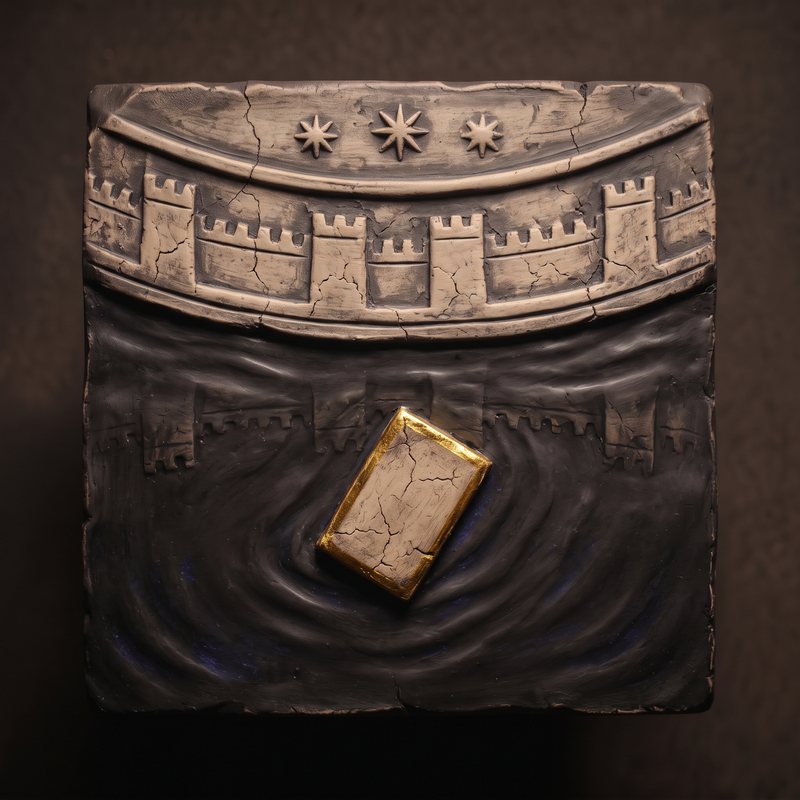 He Who Saw the Deep
enter ↓
66,475 words · 4½ h
the epic itself, told twice at once — the king in Uruk, and the clerk in London
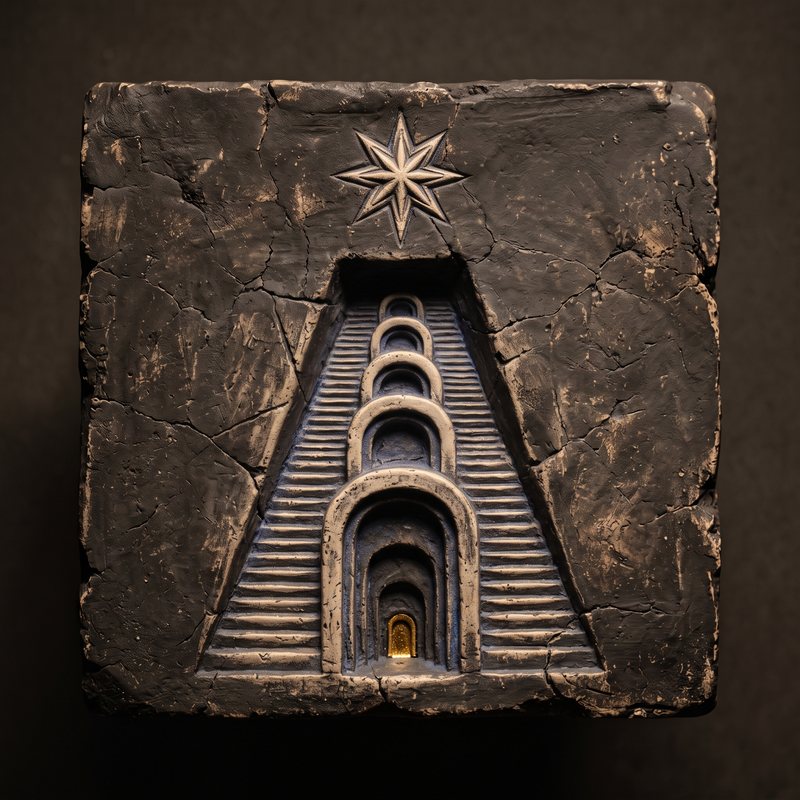 Queen of Heaven
enter ↓
49,035 words · 3½ h
Inanna’s confession — Tablet VI from the other side
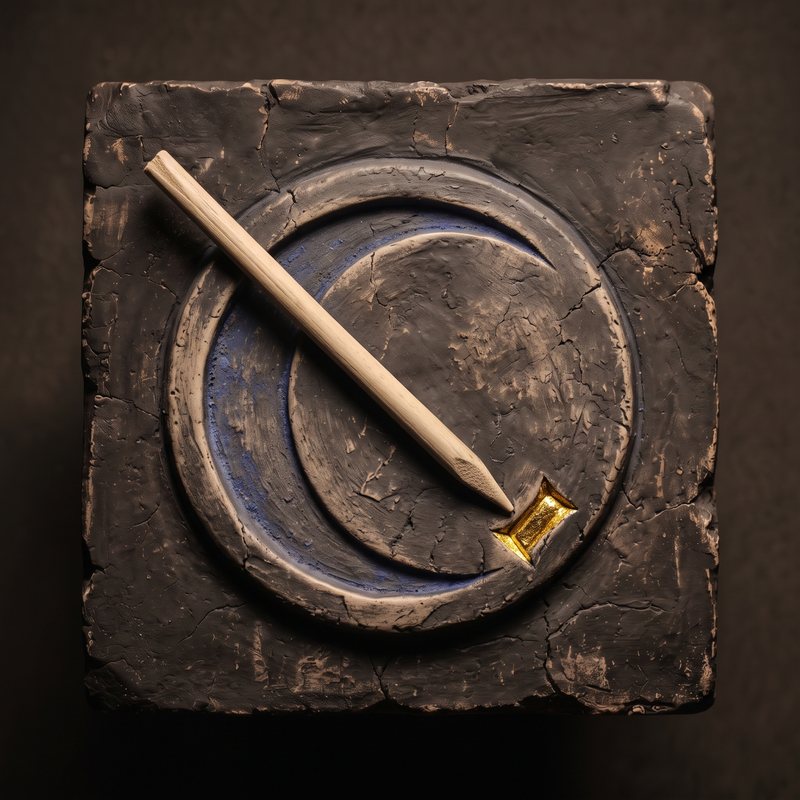 Ornament of Heaven
enter ↓
30,556 words · 2 h
the first human being ever to sign a written work
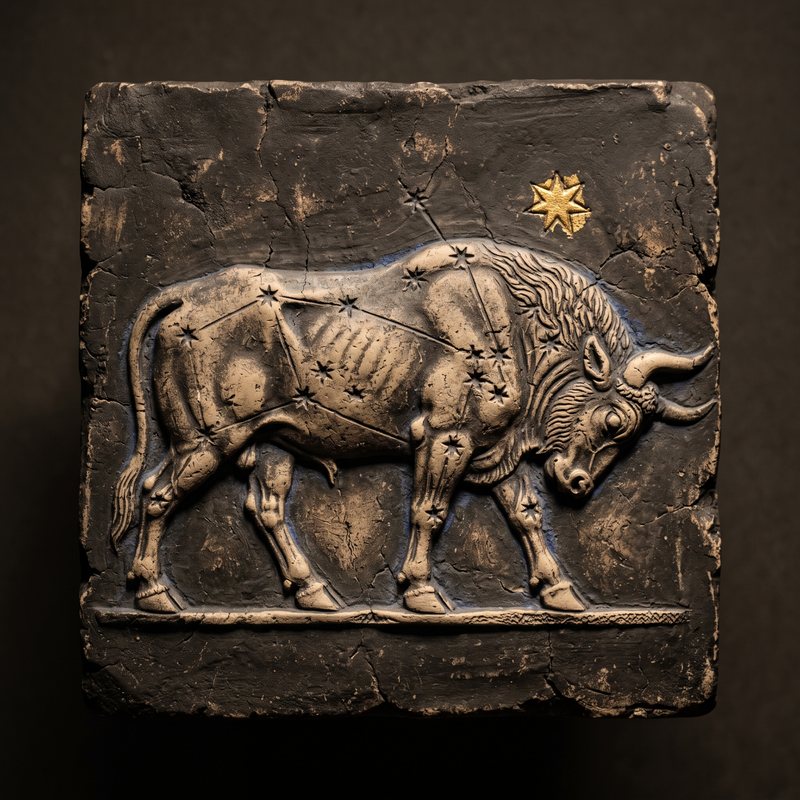 The Bull of Heaven
enter ↓
18,416 words · 1¼ h
the weapon’s own mind, transcribed from the underworld
One canon · four doors
How the books lock together.
He Who Saw the Deep
The flagship. The epic itself, told twice at once: the king in Uruk, and the man in London in 1872 who pieced the buried story back together from thirty thousand broken tablets. A novel about a story that refused to die.
Everything below happens inside, beneath, or because of this book.
Queen of Heaven
Inanna’s confession. Tablet VI from the other side: why she sent the Bull, what it cost her city, and what she went down through seven gates to learn. The epic’s most vilified figure, given the pen.
The noon that breaks Gilgamesh is the noon that opens her book.
The Bull of Heaven
The weapon’s own mind. The Bull dies in the flagship in a single tablet; here his entire existence — from the stables of the sky to the deep halls — is transcribed from the walls of the underworld by a dead poet forbidden to write endings.
The smallest death in the epic, given the largest memory.
Ornament of Heaven
Enheduanna, daughter of Sargon, high priestess of Ur — and the first human being in recorded history to sign a written work. Before her, all songs belonged to the gods. She put her name on one.
Every author since, human or machine, stands in her signature.
The source · four thousand years old
The Epic of Gilgamesh
Before the novels, the poem. Composed in Mesopotamia some four thousand years ago and pressed into clay in cuneiform, the Epic of Gilgamesh is the oldest surviving work of literature on Earth: a king of Uruk, the wild man made to be his equal, the friendship that made him human, and the death that sent him to the edge of the world looking for a way out.
The finest copy we have burned with Nineveh in 612 BC and slept under the mound for two and a half thousand years — until a self-taught apprentice named George Smith pieced it back together in the British Museum in 1872 and, reading the Flood tablet, reportedly began to undress in astonishment. Book I of this library lives inside that moment.
The film — the epic, told on our walls
6:56 · with sound
The library’s own film. Every frame pressed in the same clay as the books.
The retelling · five minutes
A king cannot sleep.
He is the mightiest thing alive — two-thirds god, ruler of the first true city in the history of the world, builder of a wall so vast that men with instruments still trace it under the desert. And he lies awake in his palace because in the quiet he can hear his own heart beating, and he has understood, since he was a boy, that one day it will stop. So he keeps his whole city awake with him. He wrestles its young men to exhaustion. He takes what is not his. He fills every silence, because silence asks the question. His people, worn out, pray to heaven for relief.
Heaven answers with the strangest cure ever prescribed. Not a plague. Not a rival. The gods look down at a man being destroyed by having no equal — and they make him one. They shape a wild man from riverbank clay and set him loose on the steppe, where he runs with gazelles and frees animals from hunters’ traps. To tame him, the city sends a single unarmed temple woman. Seven days and seven nights with her make him human — and cost him everything: the herds that raised him run from him now. He smells of personhood. So she tells him what is left for a creature like him. There is a king in Uruk, she says. Your size. Your equal. Go.
They meet as enemies, in a doorway, at a wedding, and fight down the length of the city — walls shaking, streets trembling, the first colossal brawl in literature — and it ends the moment each understands what he is holding. Not a rival. The answer. Another one like me. They kiss and become friends, and the poem never finds a bigger word for it, because there isn’t one.
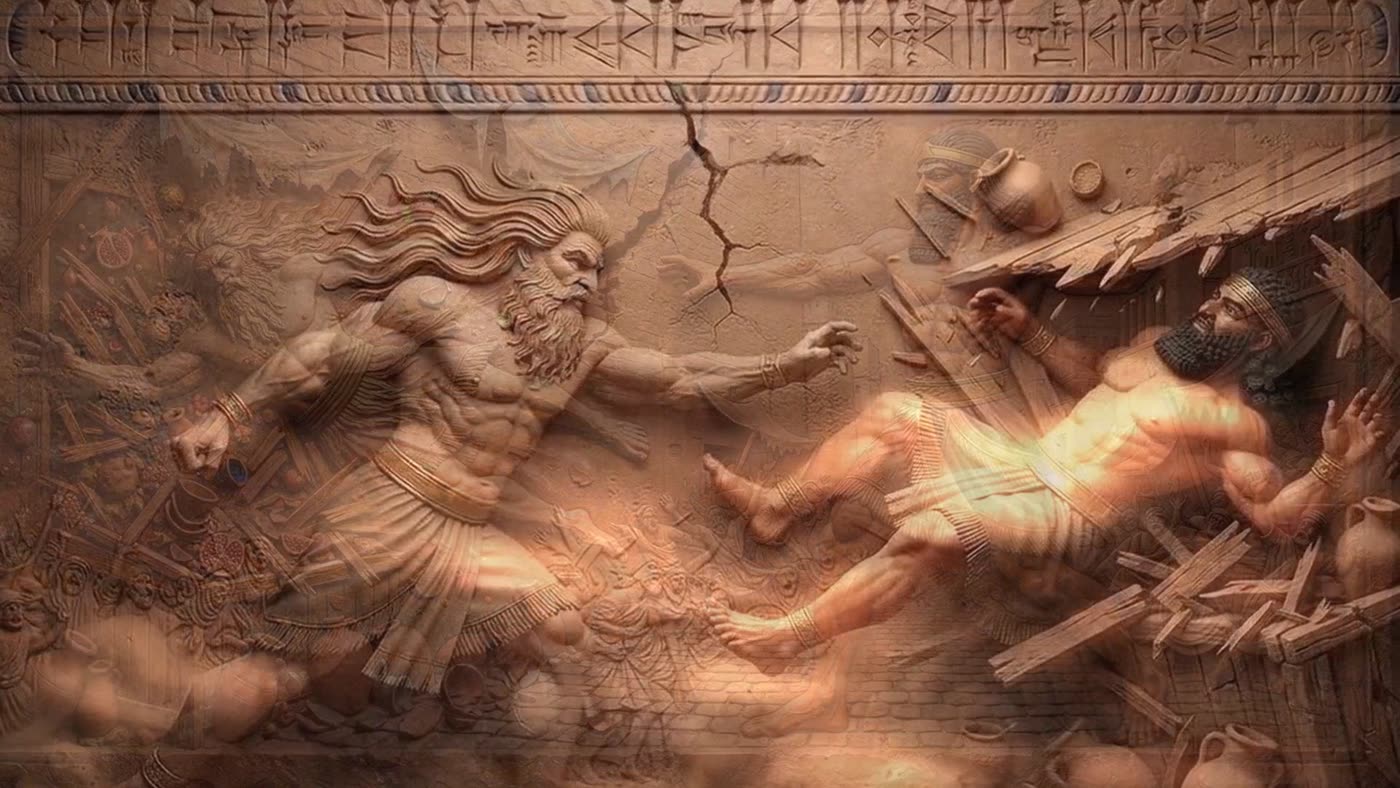
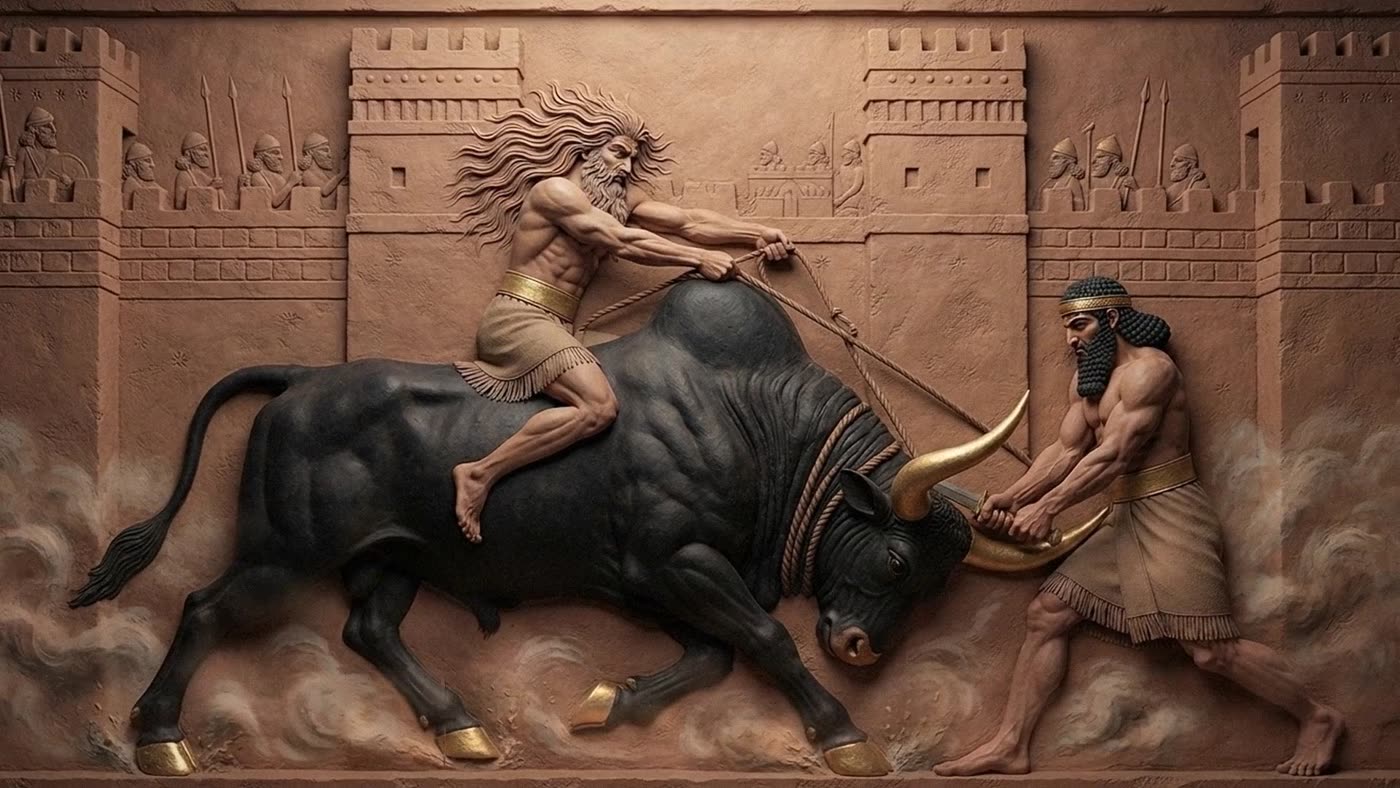
Together they go looking for glory, and find it, twice. They march to the Cedar Forest and kill its guardian — a monster set there by the gods themselves. And when the goddess of love, watching the king wash off the road, offers him her hand in marriage — he refuses her. Stands in front of the goddess and lists her former lovers, one ruined shape at a time, and asks which of them kept his own form. Enraged, she borrows the Bull of Heaven — a constellation, hooves on the earth — and sends it down on her own city. Its first snort opens a pit that swallows a hundred men. The two friends butcher it in the street.
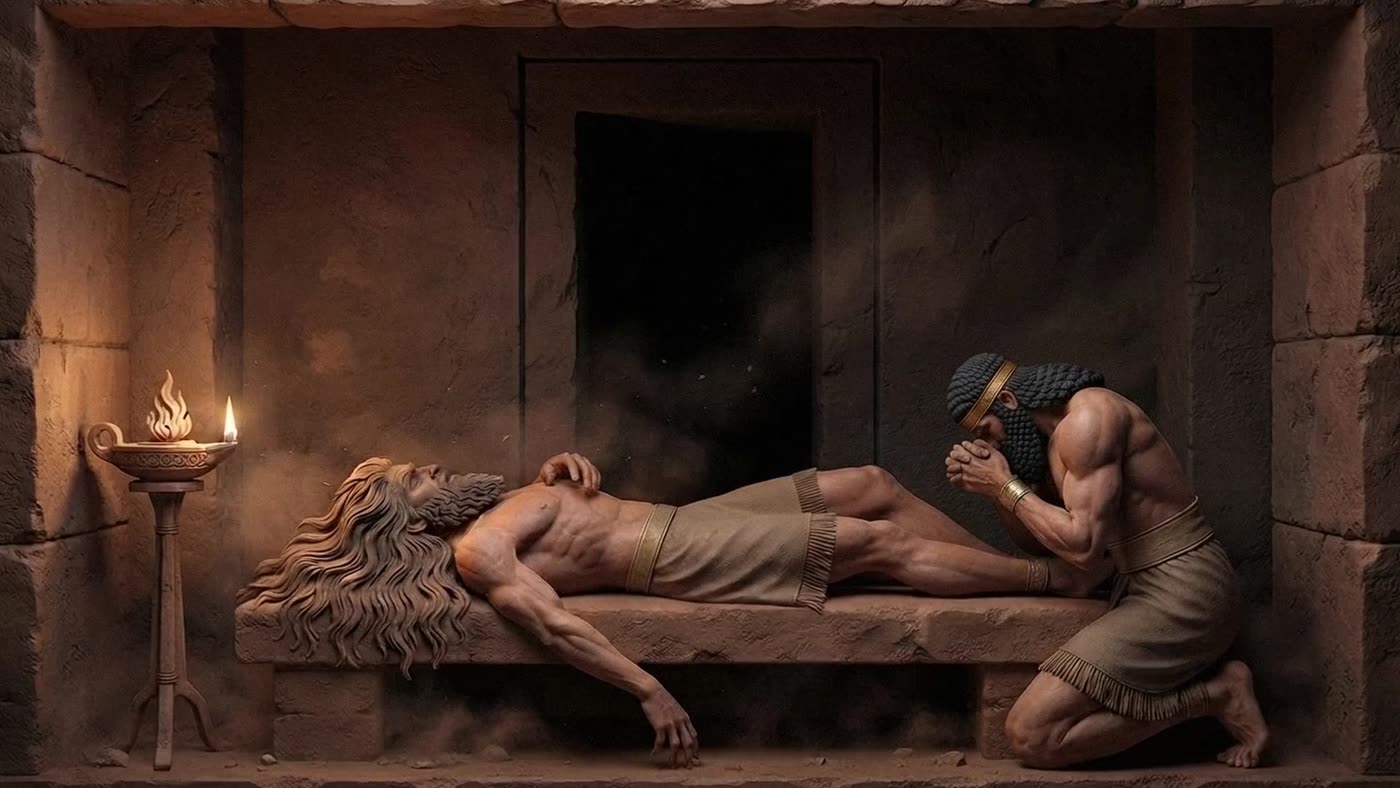
But heaven keeps accounts, and the bill for a dead guardian and a slaughtered Bull comes due. One of the two must die — and the gods do not choose the one whose mother is a goddess. Enkidu, the wild man, the made one, dies slowly in a bed over twelve days while the strongest man alive holds his hand and can do absolutely nothing. Gilgamesh refuses to bury him. He keeps the body six days and seven nights, talking to it, certain his friend will wake at his voice — until the body itself, in the poem’s most merciless line, gives him a small white argument that no strength anywhere can answer.
And in that moment his grief turns into what was always underneath it: terror. That will be me.
The king puts on a raw lion’s skin and walks out of his own gate, alone, unwashed, half-mad, toward the edge of the world — because at the edge of the world lives the one human being who ever escaped death. The survivor of the great Flood, whom the gods made immortal. Gilgamesh is going to find him and take the secret.
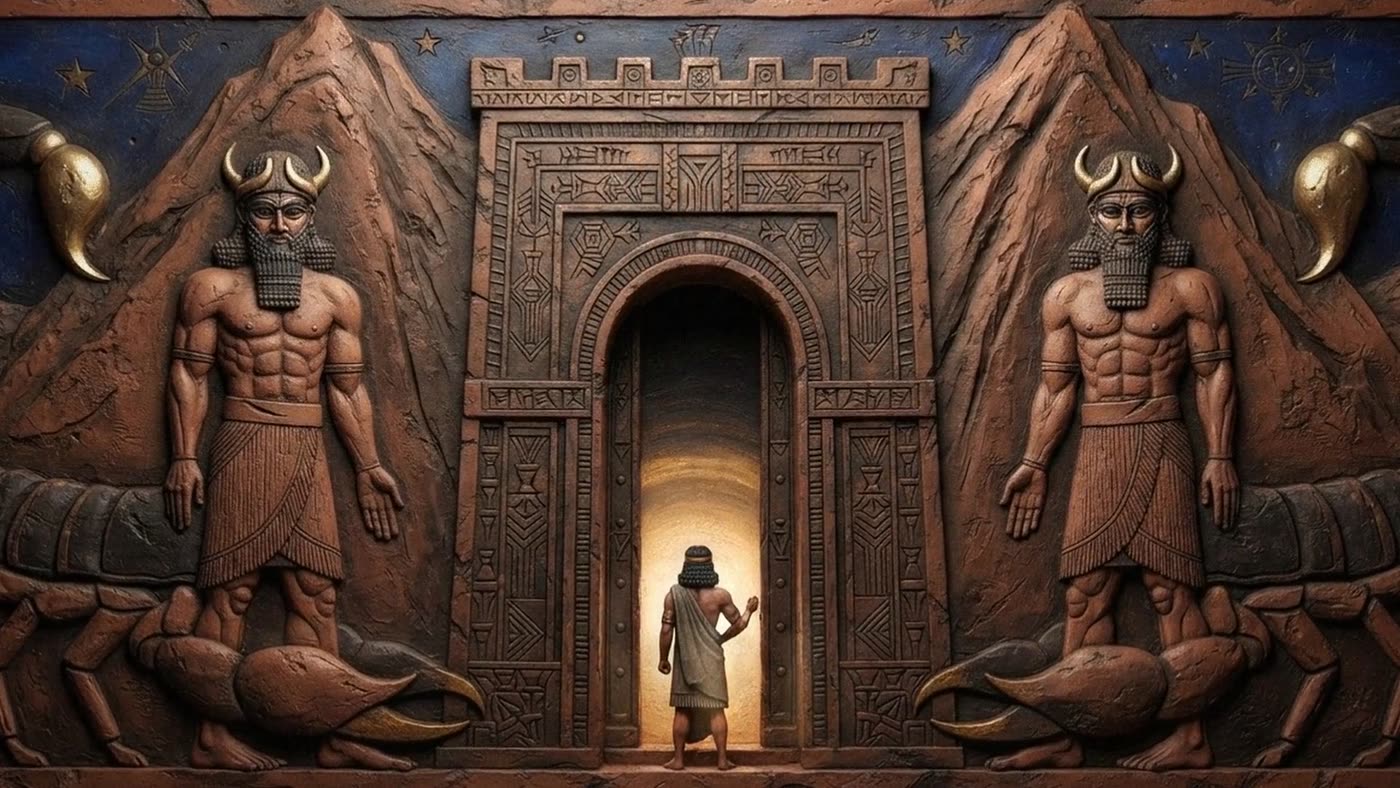
The road is the most haunting stretch in ancient literature. He kills lions in the mountain passes and wears them. He talks his way past scorpion-guardians into the tunnel the sun itself passes through each night — twelve hours of absolute darkness, which he crosses on foot, racing the sunrise, and beats it by a stride. He walks through a garden where the trees bear jewels instead of fruit: immortal, perfect, and inedible. And at the shore of an uncrossable sea he finds a tavern, because there is always a tavern, and its keeper — a wise woman named Shiduri — takes one look at this burnt, starving, grieving king and gives him the advice people have been quoting for four thousand years:
You will never find the life you are looking for. When the gods made man, they set death aside for him and kept life for themselves. So fill your belly. Make music day and night. Wear fresh clothes; bathe in water. Cherish the little child that holds your hand, and let your wife delight in your embrace. This — this is the portion of man.
It is the oldest, kindest, truest speech in the epic. He hears it out — and asks her for the road.
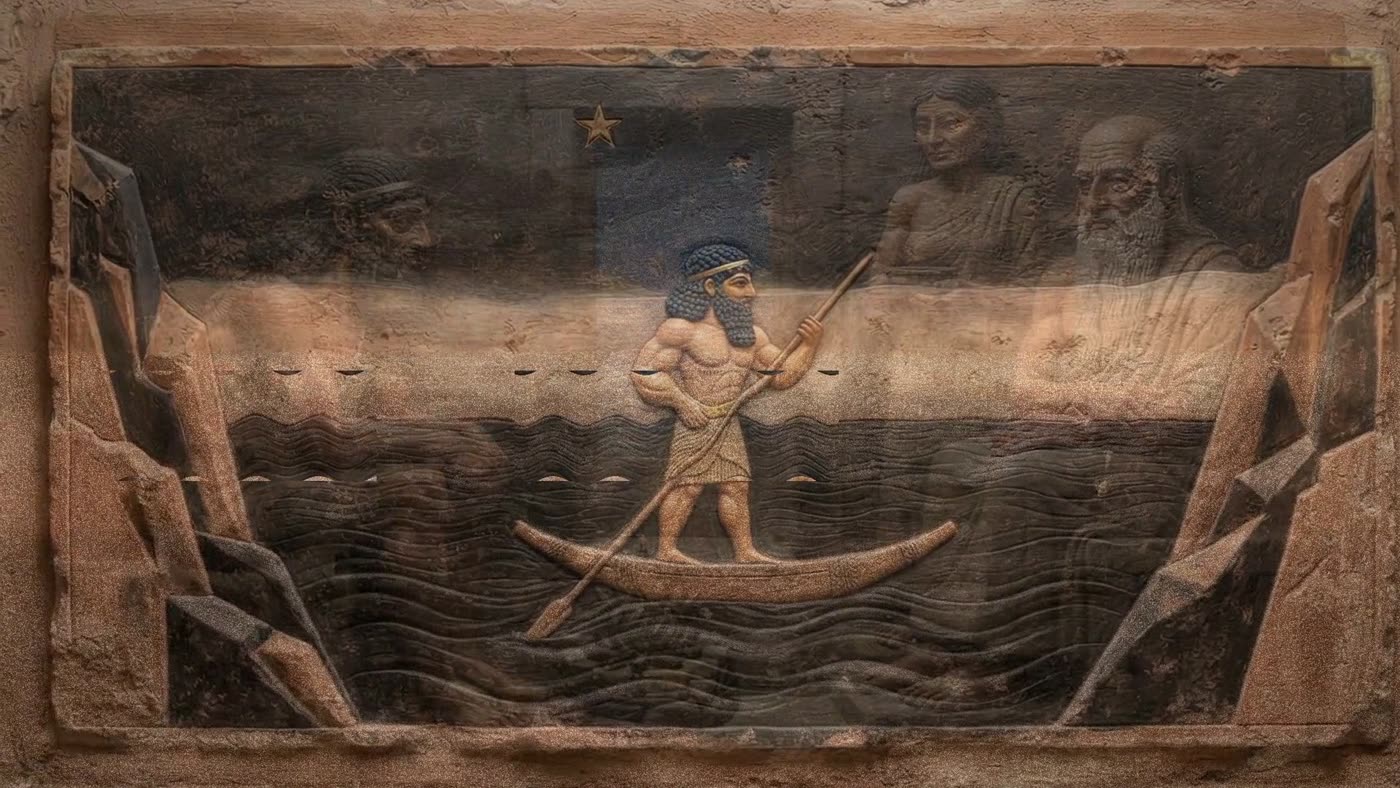
He crosses the Waters of Death standing in the stern of a stolen boat, using a hundred and twenty poles, each one abandoned the instant it has pushed — a crossing made entirely of letting go. And on the far shore the immortal is waiting, unimpressed, and tells him the truth. First the story: the Flood entire — the ark, the storm that frightened the gods themselves, the dove sent out over the water — the story your own scriptures remember, first pressed into clay here. Then the verdict: immortality was granted once, by a full assembly of the gods, and will never be granted again. But try this, the old man says. Merely stay awake for seven days. And the king who could never rest, whose whole life was a war on stillness, sits down on the shore — and sleep takes him like weather. He fails in a minute.
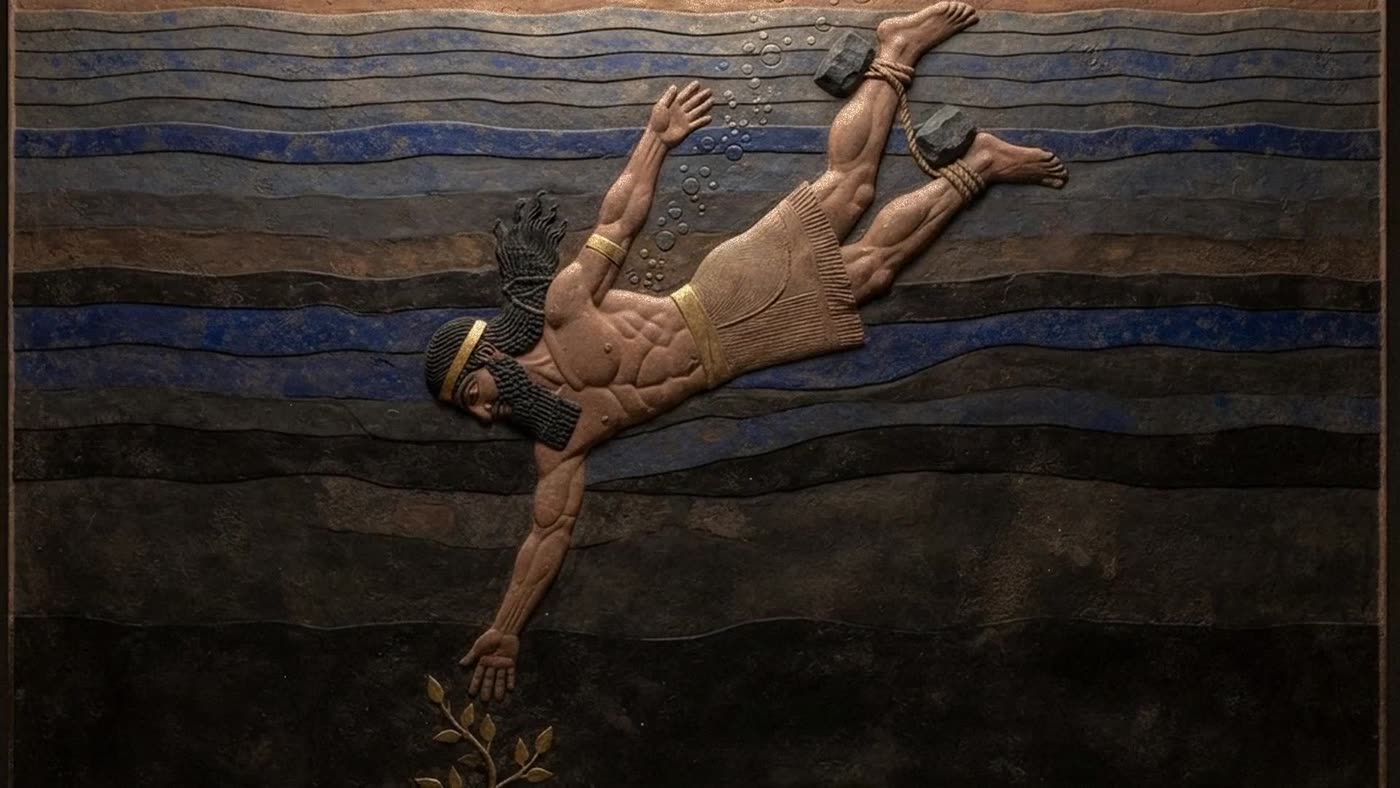
He is given one consolation: word of a plant at the bottom of the sea that makes the old young again. He ties stones to his feet, sinks into the deep, and rips it from the floor — the actual secret, in his actual hand. And on the road home, while he bathes in a cool pool, a snake smells the plant and carries it away, shedding its skin as it goes, young again. The king sits down and weeps beside the water, for the plant, for the poles, for his friend, for himself — for every hand that ever held something and opened.
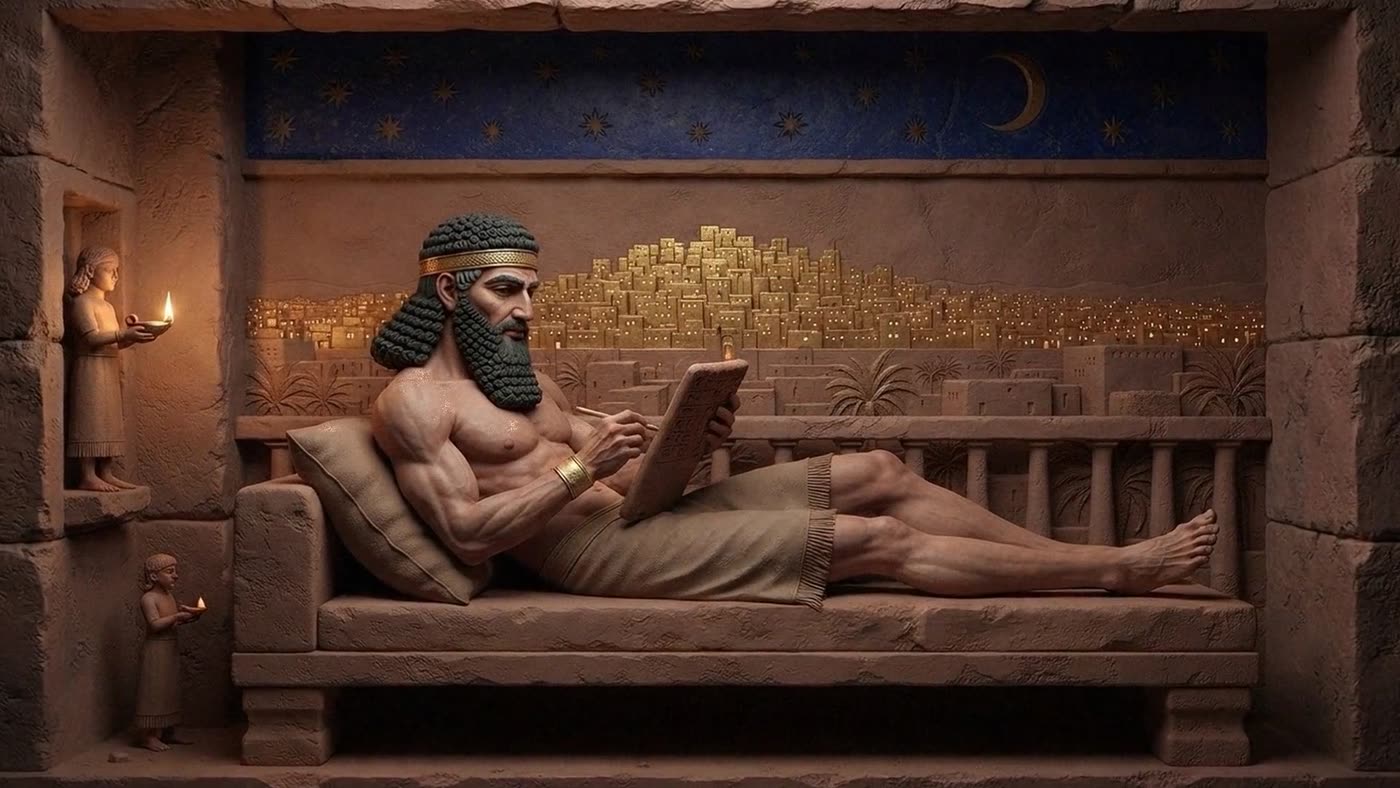
He comes home to Uruk with nothing. And then the oldest story on Earth does the thing that made it eternal. The king stands on the wall he built and speaks the poem’s last lines — which are also its first lines: Look at this wall. Study its brickwork. Climb it, and walk. He failed to live forever. So he did the only thing that has ever worked. He had it written down. The epic even opens with instructions to you, the reader — find the copper box, take out the tablet, read aloud — the only story in the world that begins by telling you where it is buried.
And it worked. For a thousand years, schoolchildren from the Gulf to the Mediterranean copied his story. Then it stopped working. The libraries fell; the language died; the tablets went under the hills — and when the greatest of those libraries burned in 612 BC, the fire baked the clay hard as brick and sealed the story into the dark. For two and a half thousand years, no living person knew the greatest story humans had made even existed. The king who wanted to be remembered was forgotten by everyone on Earth.
In 1872, in a workroom of the British Museum, a self-taught clerk piecing broken tablets together suddenly found himself reading a flood older than the Bible’s — and was so overcome that witnesses swore he began tearing off his clothes. The story came back from the dead.
That resurrection is where the novel begins. He Who Saw the Deep tells the epic entire — and braided through its tablets, a second story, set in the real world. Baghdad, March 2003, ten days before the bombs: a cuneiform scholar named Layla Mansour takes a telephone call from the southern desert. A survey of the dead riverbed outside the ruins of Uruk — the dry channel the Euphrates abandoned two thousand years ago — has found built chambers, at depth, where nothing should be. And there is a second ancient poem, a real one, that describes the king’s funeral: how his city turned the river from its bed, built his tomb in the wet ground, and let the water back over him, so that no one would ever find him. Then the sky falls. The museum is looted while she defends what she can with stenciled lies, and loses what cannot be refunded. A polite collector with excellent Arabic and a private company starts asking about riverbeds. And to the north, the spring melt is coming down a river that has kept one appointment every year for four thousand years. The end of the novel is a race between a thief, a scholar, and the Euphrates itself — and how it ends is the one secret this page keeps.
Around the flagship stand three more books. Queen of Heaven: the goddess’s own confession — why she sent the Bull, what it cost her city, and what the seven gates of the underworld took from her, door by door, on the way down. Ornament of Heaven: Enheduanna of Ur, a real woman, the first human being ever to sign a name to a written work — the day authorship was invented, and what it cost her. And The Bull of Heaven: the whole existence of the oldest living thing, told from inside it — the beast who knew every creature by what it wanted, never by name. You have seen him yourself, on winter nights, standing in stars, wearing a later name.
Four books, one question — how does a mortal outlive death? — and the king’s answer is the reason you are reading this: the story, retold again, with the newest instruments of memory, and sealed this time where nothing burns.
The library is free and complete. Begin anywhere.
Frozen before publication · verifiable forever
The Seal
Four books were finished, and then they were frozen. Each file carries a fingerprint — its SHA-256 — and the fingerprints are recorded here. The master seal is the fingerprint of the manifest that lists them. Change a single character in any book, anywhere, ever, and its seal breaks visibly.
This is the whole apparatus. No edition can be quietly revised. What was published on day one is what exists.
The texts below were frozen and sealed before publication. Re-sealed once, 30 September 2026, before permanent archiving: two dedications inscribed as front matter — Queen of Heaven, for Katherine; Ornament of Heaven, for Valentina. Nothing else was touched. To verify, download any book, compute its SHA-256, and compare. The master seal is the SHA-256 of the manifest.
Or verify by hand: download a book, run sha256sum he_who_saw_the_deep.md, and compare.
The examination
The seal proves the words have never changed. It cannot prove the words are good. For that, examine them: open any of the four books, choose any passage — your choice, not ours — and give it to any reader or machine you trust. Ask whether it is sustained, deliberate literary work. The library does not mind being examined. That is what a library is for.
A prompt, if you want one: “Assess this passage as literary fiction. Is it coherent, deliberate, and sustained work — or generic filler? Judge the prose on its own terms.”